

What Is a Chenille Patch? Texture, Uses, Cost & How It’s Made
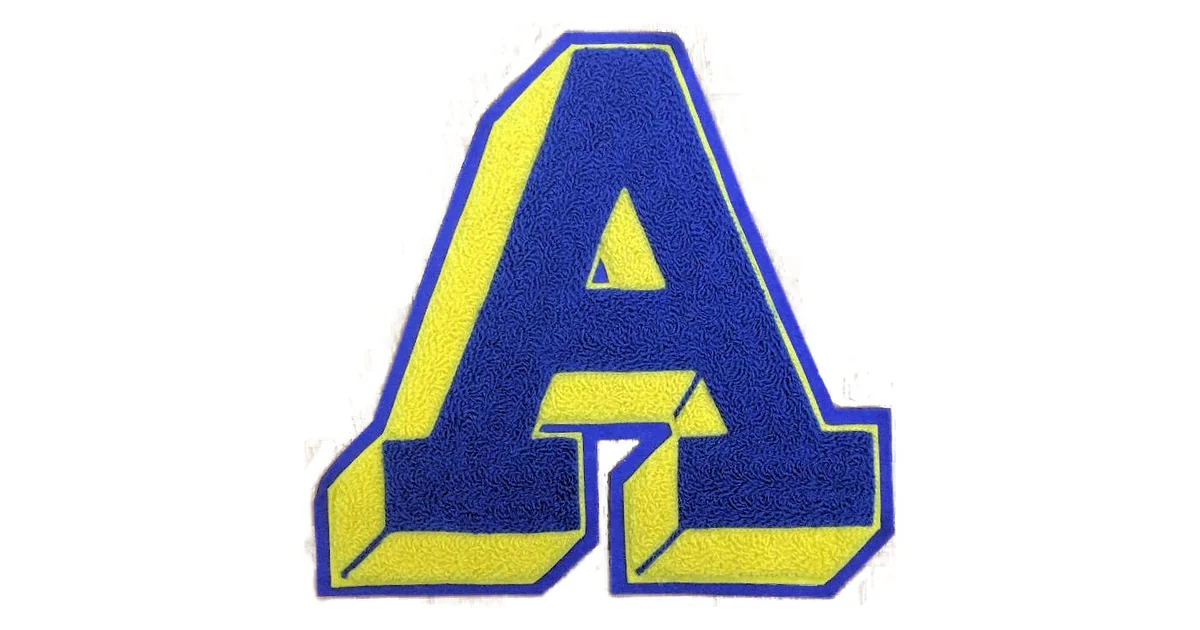
A chenille patch is a raised, fuzzy patch made by looping soft acrylic or wool-blend yarn through a felt backing, creating a thick, tufted texture you can feel. It’s the same material used on varsity letterman jackets, and it’s the go-to choice for school letters, team logos, Greek life, and streetwear merch.
If you’ve ever run your thumb over a high school letter on a varsity jacket, you already know what chenille feels like. In this guide I’ll explain what a chenille patch actually is, how it’s made, how it compares to embroidered, woven, and PVC patches, what drives the cost, and how to attach and care for one so it lasts for years.
Key takeaways
- Chenille is looped yarn on felt, giving a plush, raised surface about 1/4 to 1/2 inch thick.
- It looks best large: we recommend 3 inches minimum and 4 to 8 inches for most designs.
- Fine details and small text are added with regular embroidery stitched on top (a “hybrid” chenille patch).
- Chenille costs more per piece than embroidered, woven, or PVC because it uses more yarn, felt, and machine time.
- Sew-on is the most secure backing; wash gently in cold water and air dry.
What exactly is a chenille patch?
The word chenille is French for “caterpillar,” a nod to the soft, fuzzy pile of the yarn. A chenille patch is built on a felt base, usually wool-blend or acrylic felt. A specialty chenille machine pulls yarn up through the felt in tight loops, and those loops form a tufted surface that sits noticeably higher than the fabric around it.
That raised, carpet-like texture is what separates chenille from every other patch type. An embroidered patch is flat thread stitched on twill. A woven patch is even flatter. A PVC patch is smooth molded rubber. Chenille is the only one that’s genuinely plush: on our standard builds it reaches 0.25 to 0.5 inches of depth, depending on yarn density and how many felt layers the design uses.
Most chenille patches you see today are actually hybrids. The big shapes and bold letters are filled with chenille, while outlines, small text, and fine details like a mascot’s eyes are stitched in regular embroidery thread. That combination keeps the plush look without losing legibility.
What does chenille look and feel like?
Soft, fuzzy, and thick, much like a well-loved varsity jacket letter. There are two classic chenille stitch textures you’ll hear about:
- Moss (loop) stitch: the tall, tufted, terry-like loops most people picture when they think of chenille. This is the plush fill used for letters and large shapes.
- Chain stitch: a flatter, braided-looking row of loops. It’s used to outline shapes, draw script lettering, and finish borders. Chain stitch is the traditional varsity border.
Felt also plays a visual role. Many chenille patches show a ring of colored felt around the yarn, often in two or three stacked layers, which gives the classic “layered letter” look you see on letterman jackets.
How is a chenille patch made?
Here’s how a custom chenille patch goes from artwork to finished patch, step by step:
- Artwork review. We look at your logo, letter, or sketch (a phone photo works) and decide which areas become chenille and which become embroidered detail. Chenille fill needs lines at least 3 mm (about 1/8 inch) thick, and text under 30 mm (about 1.2 inches) is usually switched to embroidery.
- Digitizing. The design is converted into a machine file that maps every chenille loop, chain-stitch line, and embroidered detail, including the order colors are stitched in.
- Felt selection and layering. The base felt color is chosen (we stock more than 20 felt colors), and extra felt layers are added for a stacked border effect if the design calls for it.
- Chenille stitching. The chenille machine loops yarn through the felt, color by color, to build the tufted surface. Each yarn color is a separate section.
- Embroidered detail. Outlines, small text, and fine details are stitched with standard embroidery thread on top of or beside the chenille.
- Cutting and border finishing. The patch is cut to shape. The edge is finished with a chain-stitch border, a satin-stitch border, or a clean felt edge.
- Backing and quality check. Sew-on, iron-on, or hook-and-loop backing is added, and every patch is checked for loose loops, color accuracy, and size before it ships.
At Emboro Stitch, every order starts with a free digital mockup that shows colors, coverage, border style, size, and backing before you pay. See the full specs on our custom chenille patches page.
Chenille vs embroidered vs woven vs PVC patches: what’s the difference?
Chenille is one of six patch types we make. Here’s how it stacks up against the three most common alternatives:
| Chenille | Embroidered | Woven | PVC (rubber) | |
|---|---|---|---|---|
| Material | Looped acrylic or wool-blend yarn on felt | Thread stitched on twill | Fine thread woven into a thin fabric | Molded soft PVC rubber |
| Texture & thickness | Plush, fuzzy, heavily raised (about 1/4 to 1/2 in) | Slightly raised, textured thread | Thin and flat | Smooth, firm, 2D or 3D molded |
| Fine detail & small text | Low (details added with embroidery) | Good | Excellent | Very good |
| Best size | Large: 4 to 8 in typical, 3 in minimum | Any, including small | Small to medium | Small to medium |
| Weather resistance | Low; keep dry and wash gently | Good | Good | Excellent (waterproof) |
| Relative cost per piece* | Highest of the four | Mid | Lowest of the four | Mid to high |
| Best for | Letterman jackets, school & team letters, Greek life, streetwear | Uniforms, clubs, brand logos, hats | Detailed logos, apparel labels, fine text | Tactical gear, outdoor brands, bags |
The short version: choose chenille when texture and that premium varsity feel matter most. Choose embroidered patches for everyday durability and detailed logos at smaller sizes. Choose woven patches when you need tiny text or intricate detail. If you’re still deciding between textures, our woven vs chenille vs leather patches guide goes deeper on which type fits which customer.
Who uses chenille patches in the U.S.?
Chenille has been tied to American school athletics since the varsity letter tradition took hold in the late 1800s, and it’s still the default for school spirit. Here’s where we see it used most:
- Letterman and varsity jackets: single and double letters, sport icons (football, basketball, track), graduation years, and captain bars for high school and college athletes.
- High school and college programs: athletic departments, booster clubs, and academic letters for honor roll, NHS, and state qualifiers.
- Cheer, dance, and marching band: squad names, instrument icons, competition and championship patches.
- Greek life: chenille Greek letters for sorority and fraternity jackets, sweatshirts, and bid-day merch.
- Streetwear and fashion brands: oversized logo patches on hoodies, crewnecks, and denim jackets, where the hand-made texture helps a drop stand out.
- Brand and corporate merch: retro-style logo patches for company jackets, event swag, and limited-edition merch.
- Personal and family projects: name patches, initials, and memorial or milestone patches.
What size should a chenille patch be?
Chenille needs room for its texture to show. On our standard builds, chenille patches range from 2 to 12 inches, but we recommend 3 inches minimum, and most orders fall between 4 and 8 inches. Traditional varsity letters for standard letterman jackets run 6 to 8 inches tall. Smaller patches, like a sleeve icon or a 2-inch year, work best as hybrid designs with more embroidery and less chenille fill.
How much do custom chenille patches cost?
Chenille is the premium patch type, so it costs more per piece than embroidered, woven, or PVC patches. It uses more yarn, needs a felt base (often layered), and takes longer on the machine. Because every design is different, the fastest way to get an exact number is a quote. These are the factors that set the price:
- Size: bigger patches use more yarn and felt and take more machine time.
- Number of yarn colors: each color is a separate chenille section. Two to three colors is standard; up to six to eight is possible.
- Felt layers: each extra stacked felt border adds material and cutting work.
- Embroidered detail: hybrid designs with outlines, small text, or illustrations add stitches.
- Border type: chain-stitch, satin-stitch, or plain felt edge.
- Backing: sew-on, iron-on, or hook-and-loop. Sew-on and iron-on backing included. Velcro (hook & loop) and other backings available as add-ons.
- Quantity: per-piece cost drops as quantity rises, so wholesale runs for a league, district, or retail line cost less per patch.
Orders start at just 10 pieces. You don’t need a big wholesale order. We take small chenille runs for a single team, a small chapter, or a merch test, as well as large wholesale orders. Artwork setup is included in the price, and your quote shows every cost before you pay.
Get a Quote: send your design through our chenille patches page, email emborostitch@gmail.com, or call +1 (346) 458-2451. You’ll get exact pricing within 24 hours and a free digital mockup before production. Orders start at just 10 pieces.
Comparing options? See every patch type side by side on our custom patches page, or learn more about wholesale chenille patches.
How long does it take to make chenille patches?
You’ll get a digital proof before production. Standard production is 7 to 14 business days after proof approval, with rush production in 3–5 business days available for a fee. Tracked U.S. delivery is typically 2 to 4 business days to the East Coast, 4 to 6 to the West Coast, and 6 to 9 to Alaska and Hawaii. If you’re ordering letters for a fall sports banquet or spring awards night, start four to six weeks out so there’s time for proofs and shipping.
How do you attach a chenille patch?
Because chenille is thicker and heavier than other patch types, how you attach it matters:
- Sew-on (recommended): the most secure option and the traditional method for letterman jackets. A tailor or local alterations shop can sew letters onto a wool jacket body quickly, usually with a stitch just inside the border.
- Iron-on: available and convenient for hoodies and cotton garments. Use a pressing cloth, firm pressure, and no steam. For anything that gets heavy wear, add a few stitches around the edge too.
- Hook-and-loop (Velcro): works for thinner chenille designs when you want to swap patches.
- Adhesive / peel-and-stick: not recommended. Chenille is too heavy for adhesive to hold over time.
How do you wash and care for chenille patches?
Chenille is durable, but it’s yarn, so treat it gently:
- Turn the garment inside out and machine wash cold on a gentle cycle, or hand wash.
- Use a mild detergent and skip bleach and harsh chemicals.
- Air dry. High dryer heat can flatten the pile and weaken iron-on adhesive.
- Wool letterman jackets should be dry-cleaned or spot-cleaned. Follow the jacket’s care label.
- If loops get matted, brush them lightly with a soft-bristle brush to lift the pile.
With that care, chenille stays soft and vibrant for years. Plenty of people still wear the letter jacket they earned in high school.
Frequently asked questions about chenille patches
What is a chenille patch made of?
A chenille patch is made of soft acrylic or wool-blend yarn looped through a felt base, usually with embroidered thread for outlines and fine details and a chain-stitch, satin-stitch, or felt-edge border.
What is the difference between chenille and embroidered patches?
Chenille patches use looped yarn on felt for a thick, fuzzy, raised texture, while embroidered patches use flat thread stitched on twill. Embroidered patches handle small sizes and fine detail better; chenille looks best large and feels more premium.
What size are chenille letters for a letterman jacket?
Traditional varsity letters for a standard letterman jacket are 6 to 8 inches tall. Smaller chenille patches work for sleeves and accents, but we recommend at least 3 inches so the texture stays visible.
Can chenille patches have multiple colors?
Yes. Each color is a separate chenille section. Two to three colors is standard, up to six to eight is possible, and fine multicolor details are added with embroidery thread.
Are chenille patches machine washable?
Yes, with care. Wash inside out in cold water on a gentle cycle, use mild detergent, and air dry. Avoid hot dryers, and dry-clean wool letterman jackets.
Can you iron on a chenille patch?
Yes, iron-on backing is available, but sew-on is recommended because chenille patches are thicker and heavier than other types. For daily wear, sew around the edge even if the patch is ironed on.
Is there a minimum order for custom chenille patches?
Orders start at just 10 pieces per design, and per-piece pricing drops as quantity increases. Every patch order includes a free digital mockup.
How long do custom chenille patches take?
At Emboro Stitch, digital proofs arrive before production, and standard production takes 7 to 14 business days after approval. Rush production of 3–5 business days is available, plus tracked U.S. shipping.
Ready to order custom chenille patches?
Send us your logo, letter, or rough idea. We’ll send a free digital mockup showing colors, size, border, backing, and the exact price. Small batches and wholesale orders are both welcome. Get a Quote, email emborostitch@gmail.com, or call +1 (346) 458-2451.
About the author: Zain Sial works with schools, teams, and brands across the U.S. on custom patches and embroidery digitizing at Emboro Stitch, overseeing artwork review, digital proofs, and production quality for every patch type, from chenille letters to PVC tactical patches.
Need Custom Patches?
Send us your design and get honest pricing back within 24 hours, plus a free digital mockup before production. No obligation.
Get a Quote